
Japan Travelling Guide/Tips
Posted on August 23, 2023 • 30 minutes • 6297 words
Table of contents
- 1. 0 Preflight
- 2.0 Japan
- 4.0 Useful resources:
Image by macrovector on Freepik
1. 0 Preflight
This section is dedicating to things to know before you trip and things that you should organise before your trip or just know in general.
1.1 Finances
In Japan there are few ways to pay for things the main two methods i encounted during my trip was cash and card.
1.1.1 Cash
Japan has always been a cash based society. I remember when i went to Japn back in 2017 i almost exclusively used cash but every since covid japan has been more accepting of alternative payments such as credit cards/debit cards and mobile payments (PayPay, Line Pay).
Some of the places that may only accept cash only:
- Small/ old restaurant establishments
- Small department stores
- IC card refill terminals
- Tourist attraction
Recommendation:
- Have a dedicated coin pouch as you’ll be carry lots of them around
- As well as have around 30000 yen on hand for places that don’t accept card payments.
1.1.2 Cards
During my trip i had 2 cards that I regularly used:
- Citibank Plus Everyday Debit Card / Up Debit Card
- Wise
Citibank Plus Everyday:
For me this card only had one purpose it was to withdraw money from ATM:
Pros:
- Zero fee to withdraw money from 7-bank ATM (i didn’t test other atm but 7-bank atm shouldn’t be an issue i was always able to fine a 7-bank atm 1km from where i was)
- Zero account fees and Citibank cards works across many atm across different countries
- No need to advise on travel dates
Cons:
- Not really good for general purchases as there will be currency conversion rates may be slightly higher plus POS terminals may charge an extra fee(i can’t really verify this but this is what i think more research would be required)
- Outdated mobile app but manageable for this purpose
- Paying in AUD
I just did some research on this and apparently you can no longer open an account after they were acquired by NAB and its only available to existing customers :
So for new travellers and reside in australia i recommend getting this card i used this card a couple of times and it worked fine:
Up Transactional account:
This card works great for ATM withdraws as well as online bookings via klook:
Pros:
- Zero fee withdrawal from ATM. You may get an ATM operation fee of 120 yen but i haven’t used it enough to remember
- Easy to open your account
- Amazing mobile app that automatically tracks spending best app across all bank in Australia IMO. 100% recommend
- Zero account keeping fees
Cons:
- Might not be great for general pos terminal purchases in japan (again i’ve never tried please free to let me know if you had no issues)
- Need to notify bank on travelling dates as you don’t want your card blocked and the only way to unblock is verify your identity via sms code or phone call
Fees: https://up.com.au/pricing/
Wise:
For me this cards was my primary form of card payments. I had no issues using this debit card for any location that accepted card payments:
- Convient stores
- Restaurant Chains/modern dining establishments
Pros:
- Quick and easy to setup
- Multi currently debit card
- Always paying local currency
- No need to notify that your travelling
Cons:
- Cost $10 AUD for the debit card
- Fee’s associated with currency conversion usually 1%
- Can only withdraw 350 AUD per month
Fees: https://wise.com/au/pricing/
Pro tip: When travelling please advise your bank that you’ll be travelling to avoid your card from getting blocked
1.2 Immigration
The immigration process in Japan has been streamlined ever since COVID as the immigration documentation can all be done online and that will fast track you through immigration. Overall the immigration process only took me 1 hr and most of it was just waiting in a line since the process was quick. I did have to fill in one forms and get my fingerprint scanned.
1.2.1 Japan Web
Follow the process via here to register your details: https://vjw-lp.digital.go.jp/en/
Quarantine Procedure (Fast Track) (FYI: No longer required)
Details required:
PassportDetails you’ll be stayingFlight you’ll be taking to and from JapanInternational Covid Vaccine certificate (Can get this via mygov)
Once filled out you’ll be given a QR code either screenshot this QR code or have the website up when you arrive to Japan to show the custom officers.
Immigration (Fast Track):
Details required:
- Passport
- Details of where you’ll be staying
- Flights you’ll be taking to and from japan
Once filled out you’ll be given a QR Code either screenshot it or have the website up when you arrive to show the custom officers.
Custom Declaration:
This is recommended to be filled out 48 hours before you leave. I can’t remember what they’ll ask you but it will all be in the questionnaire saying did you bring any of these stuff. Details required:
- Remember what’s in your suitcase
You’ll be given a QR Code either screenshot it or have the website up.
Tips:
- Have the details prepared so you’re not constantly have to go through your bag
- Hold on to your passport so you don’t lose it
- Fill out all the forms in Japan Web for fast tracked immigration
1.3 Transportation
So there are currently 3 main transport methods:
- Trains (main form of transport)
- Busses
- Taxi (super expensive would not recommend unless urgent)
1.3.1 Trains
So majority of your travelling with be done via train. This section is about what you’ll need to know to ride the train i talk more about the complex japan transport system and how to ride it in section 2.3.
1.3.1.1 JR Rail Pass
The JR rail pass is a great way to save money as a tourist if you’ll be travelling long distances and across difference prefectures in Japan. However there can only be used for JR Train which is pretty common in the major cities so you’d have no issues just surviving on JR alone. The JR pass comes in two types of classes Regular and Green Car.
Ordinary Car:
- Contains reserved and unreserved sections
- Reserved sections have plenty of leg room for a average person
Green Car:
- Can book both Ordinary and Green car
- More leg room then regular
- Nicer looking chairs
- USB port for charging
- Sometimes has power ports for charging
- Is only reserved
As for my opinion is the green car worth it? I’d say it’s not worth it as most trains either have 1-2 cars that are green car and they still get filled fairly quickly. Especially for longer distances train i’d have to wait sometimes 1-2 hours for the next train to get a booking. Its best to save your money and get regular.
Currently there are two general ways to get the JR rail pass via travel agency and official website they both are identical however there are two additional perk you get with the official one but at the cost of a slightly higher price:
- No need for voucher, if you’re getting from travel agency like klook you’ll have to wait for them to mail you the voucher that can take up to 10 days which will then need to be exchanged for the JR Pass in the JR Exchanges Offices. As for the website once you order it you can just redeem it at the JR Exchange Offices.
- You can make online seat reservations however you still need to pick up the ticket at the train station. So you’ll need to get there like 15-30 minutes early to account for waiting in line to pick it up or pick it up the day before to avoid the rush.
Official Website: https://www.japanrailpass-reservation.net/
Klook: https://www.klook.com/en-AU/activity/1420-7-day-whole-japan-rail-pass-jr-pass/
To evaluate whether the JR rail pass is worth it this is the resource i used: https://www.japan-guide.com/railpass/
JR Pass Info: https://www.youtube.com/watch?v=7hPkkgr59Q8
Tips:
- If you’re booking a Shinkansen. My advice is to book reserve your seats the night before as booking on the day may result wait 1-2 hours for the next available train to get a booking that happened to me a few times.
- Research closest JR Exchange Offices
- If ordering via a travel agency please order it at least 3 weeks before you leave so you’ll have enough time to recieve the exchange order.
- Use the JR rail pass calculator to see if its worth getting the JR Pass
1.3.1.2 IC Cards
Transport cards are an alternative way to pay for the train they operate identical to a Go Card in Queensland, Australia. In Japan there are 10 difference IC Card offered across different railway companies but you really only need 1 as they’ll work for a majority of trains, busses & subways.
However there are limitations to IC cards even though any of these cards will work for any region. The start and stop destination has to be in the same region for example you can’t travel from osaka to nagoya via IC cards as they’re different regions. So you’ll most likely have to get an train ticket or use the JR pass if you have it.
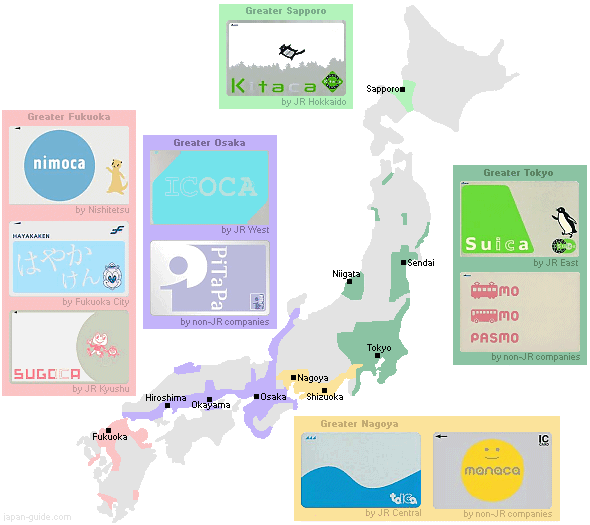
Here are some resources to read more about them: https://www.japan-guide.com/e/e2359_003.html
FYI as of Aug 2023: Suica and PASMO have currently suspended their cards except for tourist. So you can only get Welcome Suica and Pasmo Passport
1.3.1.3 Train Ticket
Sometimes you’ll have no option buy to buy a train ticket as IC cards aren’t accepted for all travelling location. Especially if you’re taking the Shinkansen across long distances and don’t have a JR pass.
Here a youtube guide on how to get a train ticket: https://www.youtube.com/watch?v=IpSMSn0DzgA
1.3.2 Busses:
TO DO
1.3.3 Taxi:
TO DO
Apps:
1.4 Internet
This section is about how do you stay connected to the internet. So there are two primary ways to stay connected to the internet. Getting a travel sim or using a pocket wifi.
1.4.1 Travel Sim
Using a travelling sim is always my preferred option to stay connected to the internet. For these reason:
- Devices are always connected to the internet
- You can split up and still be connected to the internet to meet up with others
1.4.2 Pocket Wifi
Pocket wifi can do everything a travel sim does but it does come with some limitation however its great you need multiple devices connected however there are some limitation:
- Requires you to carry around additional device
- You’ll always have to make sure that the device is charged to stay connected to the internet
- Have to pick up the device in the airport and make sure you return it at the airport before you leave
- Always have to be together just to stay connected to the internet
Tips:
- If you can avoid it don’t buy travel sim at the airport as they’re expensive. I opted to buy the travel sim before i left australia here where i got mine.
1.5 Packing
1.5.1 Useful things to pack
- Powerbank
- Spare duffle bag (this will be useful when you need to bring stuff home)
- Packable tote (This is what i got: https://www.peakdesign.com/products/packable-tote )
- Light travelling clothes (i really like the Patagonia travelling gear)
- Carabiners (trust me they’ve were so useful for certain scenarios)
- Coin pouch
- electrical travel adapters
- Comfortable working shoes
- Alpaka Hub Keychain (https://rushfaster.com.au/collections/alpaka/products/alpaka-hub-keychain ) this was super versatile for me i used it for keys and passport
- Topo design accessory pouches. I love these for organising stuff (https://rushfaster.com.au/collections/topo-designs/type_accessory-pouches )
1.6 Accomodation
During my travels there were two types of accommodations booked. They were
Appartments: I personally enjoyed appartments for long term stays if i was staying somewhere for more then a week then I’d consider book an apartment.
Pros:
- Local experience
- more independent you get to live the way you want
- usually come with great amenities ( kitchen, washer, fridge etc…)
- usually cheaper then hotels Cons:
- more planning required
Hotels: Personally i think hotels work out better for short term stays and they also sometimes come with some nice free perks. A few of the places i stayed an onsen included for free.
Pros:
- Some hotels have onsen
- Staff can usually understand english and are very helpful
- Some hotels have breakfast buffet
- hotel staff can help you make reservations at the popular restaurants
Cons:
- Usually smaller then appartments
- Lack of amenities (no kitchen) there maybe a laundromatt but its usually paid
- More expensive
- Little to no authentic Japanese experience
Ryokan: Ryokan offer a unique experience that is really only offered in japan. They’re traditional Japanese style inns that offer a traditional Japanese lifestyle and hospitality. They incorporate elements such as tatami rooms, futon beds, Japanese-style baths and local cuisine which is really unlike any other experience. Ryokan are perfect for rest days. Highly recommend you visit one at least once during your trip as its definitely an experience that will outclass any place I’ve stayed during my Japan trip.
Pros:
- Offers a really unique experience
- Most places you’ll get a dedicated staff throughout your whole stay to guide you around and to answer any questions
- Most places have the option of Japanese style rooms with tatami matts or western style rooms
- Dinner & breakfast is usually included they’re either served in your room or in a private room
- Staff are very welcoming and friendly
- Most have an onsen bath included
Cons:
- Most expensive option and pricing is usually calculated per person
- You really don’t get an option to choose what to eat its up to the chef choice so you’ll have to let them know before hand of your dietary requirements.
- You’ll have to follow some rules and special etiquitte when staying in one I’ve linked a video below:
How to stay in a ryokan: https://www.youtube.com/watch?v=FdYiNdI2kPE
Tips:
- One of the things i regret not doing when looking for accomodations is researching how far it is to the closest train station. Especially when you need to carry luggage my recommendation is to find somewhere that is at least 600m away from a train station that way you’re not regretting you life like i was when i had to carry my luggage 1.2km.
- If you book a hotel and you’ll be travelling to another hotel ask the receptions if they do luggage forwarding services. This is a life saver as it saves you from having to carry your luggages and also relatively cheap
- Research how to get there before hand so you’re not rushing to google how to get there. One of the mistake i made was i didn’t realise one of my accommodations were on top of a mountain so i spent 15 minutes walking up a mountain to realise that it probably would have taken me like 2-3 hours to get there. When there was a shuttle bus i could have taken in town to get there easier …
1.7 Language
You can travel fine with limited Japan knowledge i managed fine with only knowing like 5 basics phrases. Honestly found body language more effective to figure out what they were saying. Pointing at things or nodding is also a decent way. Also google translate will be your best friend: Some phases that i survived with:
- excuse me - sumimasen
- okay - daijoubu
- Thank you - arigatou gozaimasu
- Sorry - gommenasai
- can you speak english? - Eigo ga hanasemasu ka
Here a good website to read and make sure you remember these phrases it should be enough to travel to Japan: https://thenavigatio.com/basic-japanese-phrases-for-tourists/
1.8 Things you shouldn’t do in Japan
- Littering: Japan is very clean its frond upon to litter so always carry a plastic bag to carry around your rubbish
- Tipping: In japan there is no tipping culture and if you do tip they’ll give the money back
- Entering a house with shoes on: In japan when entering a home its customary to always take your shoes at the entrance of the building and wear indoor slippers
- Making phone calls on trains: its generally frowned upon to make a call on train. If you need to make a call some train have a dedicated booth to make phone calls
- Speaking loudly on trains
- Eating while walking
- Entering an Onsen without taking a shower before hand
1.9 Misc tips:
- One of the mistakes i made was overplanning my trip and over planning my days. Eventually it felt like i was just ticking off a checklist and that gets boring after a while. I went from planned my morning, afternoon and night down to planning two activities and just winging it for food and honestly that was more enjoyable for me then planning by the day.
- Don’t overpack your itinerary with too many things to do in a day. You need to find the right balance honestly for me was to aim to two things i wanted to do today that were close to each other and spending the rest of the day just exploring and wanding around. Remember the goal of traveling is to have fun and relax. More often then not the days i enjoyed were when my schedule was less packed and just gave me time to explore
- Include rest days in your plan for me 1 day every 1.5 week was the correct balance for me. Things you can do on you rest day are go to an onsen, spa, relax at a ryokan or chill at a coffee shop writing about your trip like i did.
- Plan other activities that are just not seeing landmarks. To be honest they got pretty boring after a while don’t get me wrong japan has amazing architecture
- Create a list of experiences that you want and see if you can achieve the goal to do for example here was mine:
- Stay in a capsule hotel
- Stay in a ryokan
- Go to an izakaya restaurant
- Visit a Japanese beach
- Go for a hike somewhere
- Stay overnight at a local village
- If you’re travelling solo here are a few places i found were great to meet some other solo travellers:
- https://www.facebook.com/groups/436169583592725 (subtle asian travel)
- https://www.reddit.com/r/travelpartners/
- Be open to have a chat with local and tourist they can give you some hidden gems and you can make new friends
2.0 Japan
2.1 Kansai
Here are the activities i enjoyed in Kansai
Wanderlog Link: https://wanderlog.com/view/zhqibcscdy/things-i-enjoyed-in-kansai/shared
Below are my recommendation for activities that i enjoyed in Kansai: During my trip i spent:
- Osaka (3 Days)
- Kyoto (3 Days)
- Nara (1 Day)
So my recommendations will only be for these places.
Primary Transport Method: Osaka: Trains - Osaka has a really great train network so basically if you want to go someone super easy to catch a train. Kyoto: Busses - To get around in Kyoto you have to travel using the bus or by walking. The train network isn’t as great compared to Kyoto. From what i remember the bus has a flat fee of 210 円 one way. Nara: Walking - For me all my attractions were basically walking distances away so for me it was super easy to walk. However i assume if your traveling to attractions that are more further out probably would have to take a combination of train & bus.
Activities:
| Name | Prefecture | Adresss | Category | Notes |
|---|---|---|---|---|
| Universal Studio Japan | Osaka | https://maps.app.goo.gl/4cw1XmyS9wt5WZcBA | Amusement Park | 1. Consider buying an express pass 2. Get there early as there can be a huge line 3. Watch this video to learn how to get to super nintendo world: https://www.youtube.com/watch?v=wT9e6PYLQts Ranking of rides i went (1 is best, 4 is worst): 1. Harry Potter forbidden 2. Spiderman 4D 3. Flying Dinosaur (Really good if you’re into thriller rides) 4. Mario Kart Ride |
| Shinsaibashisuji | Osaka | https://maps.app.goo.gl/pvcvpwwG6gW2nPTr9 | Shopping | Great for shopping |
| teamLab Botanical Garden | Osaka | https://maps.app.goo.gl/DW6sb8bY6qm4hiZYA | Park | This place has a fee: tickets usually cost $19 AUD It looks pretty amazing definitely really enjoyed it. |
| Nara Park | Nara | https://maps.app.goo.gl/qG9LofqYse9Z8hjh7 | Park | Nice relaxing park with lots of deer you can feed. Be careful once you have the the deer crackers in your hand they’ll surround you. |
| Nandaimon Gate | Nara | https://maps.app.goo.gl/4vS95HRrg8D1Dn5V9 | Landmark | |
| Todai-ji | Nara | https://maps.app.goo.gl/fhg7cpBwNucUpezn8 | Landmark | Amazing temple. It had an entry fee it was 800円 at the time i went. |
| Yasaka Shrine | Kyoto | https://maps.app.goo.gl/Cv1fciCFdmMgAPxK6 | Landmark | I recommend going here at night. It looks way better then during the daytime |
| Kiyomizu-dera | Kyoto | https://maps.app.goo.gl/BGUcTVabbkm1XqfZ6 | Landmark | Another popular landmark. I saw a lot of people wearing Kimono here so may be a night place to wear kimono |
| Maruyama Park | Kyoto | https://maps.app.goo.gl/BGUcTVabbkm1XqfZ6 | Park | This park is great during cherry blossom season. |
| Gion | Kyoto | https://maps.app.goo.gl/WvsHdqjme3a3SinL9 | District | This district has a lot of nice stores that has the ancient Japan aesthetic which i really like. Super nice to walk around and explore. Hanamikoji Street is a really nice street to work |
| Kinkaku-ji | Kyoto | https://maps.app.goo.gl/zD5m6EAvkfUx269b9 | Landmark | Another popular landmark get pretty busy. Honestly its a nice temple. |
| Fushima Inari Taisha | Kyoto | https://maps.app.goo.gl/AMA8GiPT5xGEe1Lq7 | Landmark | Great if you love hiking it is a pretty long walk. The full hike is about 2-3 hours (4km). Best to get here early as it gets pretty crowded after around 8am |
| Arashiyama Bamboo Forest | Kyoto | https://maps.app.goo.gl/52oZEB3cA3uzqAkS6 | Landmark | Another super popular landmark. Good to get here early if you can. |
Food:
| Name | Prefecture | Address | Speciality | Notes |
|---|---|---|---|---|
| Dotonbori | Osaka | https://maps.app.goo.gl/q2CUZC4GmPdhGrHGA | Street Food | Great place to go if you live street food. Here are my recommendations: 1. Melon Bread (https://maps.app.goo.gl/ZHmdA5f46c7ZVdty5 ) 2. |
| Rikuro-Ojisan no mise Namba | Osaka | https://maps.app.goo.gl/gzk2Gp9nVxNQgMT78 | Cheesecake | This is the famous cheese cake that you can only get in Osaka. It gets super busy however the line moves pretty quick. |
| 夜パフェ専門店 パフェテリア パル心斎橋 | Osaka | https://maps.app.goo.gl/Nbiz3FSkB4q31vPcA | Parfait | This place make really good parfait. Usually not a parfait person but it was super delious. |
| Tonkastu Ganko Nara | Nara | https://maps.app.goo.gl/XmCJL8eDJ4zvnDb66 | Tonkastu | Pretty good Tonkatsu place. Staff could understand english pretty well and i honestly saw a lot of tourist. |
| Nakatanidou | Nara | https://maps.app.goo.gl/J4c8goEKxNEmKkRJ9 | Mochi | Famous Mochi place you see on instagram. Every 45 minutes they make a fresh batch of mochi so if you stay there long enough you get the super fast mochi pounding. |
| Cafe Anon | Osaka | https://maps.app.goo.gl/Xc1oTQ1R5wMa8fbC6 | Cafe | This place had really good Souffle pancakes. I was really pretty impressed. Definitely recommend. |
| Kyoto Ramen Engine | Kyoto | https://maps.app.goo.gl/ETkw1EdBE4bTPEmW8 | Ramen | This was a unique ramen place. They specialise in chicken broth ramen definitely different to your traditional ramen. Gets super busy during dinner time and mainly just saw tourist try this place. |
| Tendon Makino Kyoto Teramachi | Kyoto | https://maps.app.goo.gl/Dryy9ZA1sxnevyRX6 | Tempura Rice Bowls | This was one of the best meals i had in Japan. I came 20 minutes after it opened for dinner. In the end i waited 1.5 hours. So my advice is if you want to go here come maybe a 10-15 minutes before it opens. After an hour of opening completely booked out for dinner. |
| Nishiki Market | Kyoto | https://maps.app.goo.gl/QGsUKhZLM6eE8ZsR6 | Street Food | This is a very popular market. Most of the street food i saw on sale was basically seafood |
| Ichiran | Kyoto | https://maps.app.goo.gl/Ff6a5HnVzKyUwApL9 | Ramen | Ichiran is so good even for a chain restaurant definitely a must try in my opinion |
| Gyukatsu Motomura | Kyoto | https://maps.app.goo.gl/Av4RaRYwF4hVBUFJ6 | Gyukatsu | I haven’t been to this one exactly but i’ve heard from friends that this is a must. Its super popular and i heard it gets busy so maybe best to go early or the less busy hours? 2-3pm? |
| https://wanderlog.com/plan/mjloxatngiafqsuo/kinki-guide |
2.2 Hokaido
Wanderlog Link: https://wanderlog.com/view/fufrlzqzyw/things-i-enjoyed-in-hokkaido/shared
Activities:
| Name | Prefecture | Address | Category | Notes |
|---|---|---|---|---|
| Sapporo TV Tower | Sapporo | https://maps.app.goo.gl/PsDKXPSk7U27dFvNA | Landmark | Best to go at night its looks better when it lights up. Apparently you can take and elevator up the TV Tower |
| Shiroi Koibito Park | Sapporo | https://maps.app.goo.gl/GvB5RsvpPenmen9UA | Attraction | This is really not your traditional park its more like a mini amusement park. It great if you want to know the history of Shiroi Koibito and how their s biscuits are made. |
| Nakajima Park | Sapporo | https://maps.app.goo.gl/y2tKmb4JNCtVdriX9 | Park | |
| Odori Park | Sapporo | Park | This place is amazing would recommend if you’e going during the Sapporo Snow Festival | |
| Susukino | Sapporo | District | Great place for foodies, and nightlife enthusiasts and shopping. | |
| Sakaimachi Hondori Street | Otaru | Market | ||
| Otaru Canal | Otaru | Landmark | ||
| Jigokudani (Hell Valley) | Noboribetsu | Landmark | ||
| River Oyunuma Foot Bath | Noboribetsu | Attraction? |
Food
| Name | Prefecture | Address | Speciality | Notes |
|---|---|---|---|---|
| PAUL Sapporo Stellar Place | Sapporo | Pastery | ||
| Suage+ | Sapporo | Soup Curry | ||
| Gotsubo Oyster Bar | Sapporo | Oysters | ||
| Ebisoba Ichigen | Sapporo | Ramen | ||
| Ebiten Buten | Sapporo | Tempura | ||
| Nemuro Hanamaru | Sapporo | Sushi | ||
| Sankaku Market | Sapporo | Kaisendon |
Cuisines that you must try in Hokkaido:
- Miso Ramen
- Seafood (Uni, Hokkaido Crab, Scallops)
- Kaisendon & Sushi
- Hokkaido Ice Cream
- Soup Curry
- Jingisukan (“Genghis Khan”)
- Ishikari Nabe
2.3 Tokyo
Below are my recommendation for activities that i enjoyed in Tokyo:
During my trip i spent:
- Shinjuku
- Ginza
- Chuo
- Yokohama
So my recommendations will only be for these places.
Primary Transport Method: Tokyo: Trains - The train network in Tokyo is probably the best train network in Japan. Pretty much everywhere is accessible via train. There are two major train networks JR Rail & Tokyo Metro. JR Rail usually run above ground and the metro runs underground.
Wanderlog Link: https://wanderlog.com/view/mymbnlhsev/tokyo-guide/shared
Activities:
| Name | City | Address | Category | Notes |
|---|---|---|---|---|
| Senso-Ji | Taito | 2-chōme-3-1 Asakusa, Taito City, Tokyo 111-0032, Japan | Temple | One of Tokyo’s oldest and most significant Buddhist temples. |
| Gundam Factory Yokohama | Yokohama | 279-25 Yamashitachō, Naka Ward, Yokohama, Kanagawa 231-0023, Japan | Entertainment | A must-visit for fans of the iconic Gundam series. |
| Cross Space Shinjuku (3D billboard) | Shinjuku | Japan, 〒160-0022 Tokyo, Shinjuku City, Shinjuku, 3-chōme−23−18 クロス新宿ビル 1F - 3F | Landmark/Advertising | The impressive 3D billboard in the heart of Shinjuku. |
| Shibuya Scramble Crossing | Shibuya | 21 Udagawacho, Shibuya City, Tokyo 150-0042, Japan | Landmark | The famous pedestrian crossing outside Shibuya Station. |
| Shibuya Sky | Shibuya | Japan, 〒150-6145 Tokyo, Shibuya City, Shibuya, 2-chōme−24−12 14階・45階・46階・屋上 | Observation Deck | Offers panoramic views of Tokyo from the 46th floor. |
| teamLab Planets | Koto | 6-chōme-1-16 Toyosu, Koto City, Tokyo 135-0061, Japan | Interactive Art Exhibit | An immersive digital art experience with stunning visuals. |
| Harumibashi Park | Koto | 2 Chome-3 Toyosu, Koto City, Tokyo 135-0061, Japan | Park | A serene park along the Sumida River. |
| Tokyo Station | Chiyoda | 1 Chome-9 Marunouchi, Chiyoda City, Tokyo 100-0005, Japan | Historic Building | An architectural gem and major transportation hub. |
| Tokyo DisneySea | Urayasu | 1-13 Maihama, Urayasu, Chiba 279-8511, Japan | Theme Park | Part of the Tokyo Disney Resort, known for its nautical theme. |
| Uniqlo Ginza | Chuo | 6 Chome-5-1 Ginza, Chuo Ward, Tokyo 104-0061, Japan | Shopping | Uniqlo’s flagship store in the upscale Ginza district. |
| Nakamise-dori Street | Taito | 2-chōme-3-1 Asakusa, Taito City, Tokyo 111-0032, Japan | Shopping Street | Lined with traditional shops leading to Senso-Ji Temple. |
| Akihabara | Taito | 2-chōme-18-10 Sotokanda, Chiyoda City, Tokyo 101-0021, Japan | Electronics District | A paradise for anime, manga, and tech enthusiasts. |
| Itoya | Chuo | 2-chōme-7-15 Ginza, Chuo City, Tokyo 104-0061, Japan | Stationery Store | A multi-story stationery wonderland in Ginza. |
| Shinjuku Gyoen | Shinjuku | 〒160-0016 Tokyo, Shinjuku City, Nakaokachimachi, 2-1 | Garden | A beautiful park with diverse landscapes in Shinjuku. |
| Kabukicho | 1 Chome-1 Kabukicho, Shinjuku City, Tokyo 160-0021, Japan | Entertainment District | Known for its vibrant nightlife, theaters, and restaurants. | |
| Meiji Jingu Shrine | 〒151-0001 Tokyo, Shibuya City, Yoyogi, 2-1-1 | Shinto Shrine | A tranquil oasis near Harajuku dedicated to Emperor Meiji. | |
| Takeshita Street | 1 Chome Jingumae, Shibuya City, Tokyo 150-0001, Japan | Shopping Street | Famous for its quirky boutiques, street food, and youth culture in Harajuku. |
Food:
| Name | Wards | Address | Category | Notes |
|---|---|---|---|---|
| Karashiya | Ota | Japan, 〒146-0093 Tokyo, Ota City, Yaguchi, 1 Chome−6−14 望月ビル | Ramen | There no english menu and you really only see locals but honestly loved this dish. Worse comes to worse you have to show a picture and point that this is what you want |
| Tuffle Bakery | Koto | 1 Chome-15-2 Monzennakacho, Koto City, Tokyo 135-0048, Japan | Pastry | Offers a delightful selection of pastries. Must try the truffle salt bread |
| Imo Pippi | Taito | 2 Chome-3-24 Asakusa, Taito City, Tokyo 111-0032, Japan | Dessert | Famous for their sweet potato-based desserts. |
| Eggslut | Shibuya | Japan, 〒151-0053 Tokyo, Shibuya City, Yoyogi, 2 Chome−2−1, Shinjuku Southern Terrace, 1F | Egg Sandwiches | Known for their delicious egg-based sandwiches. |
| Yakiniku Like | Minato | 新橋W・Bビル 1F, 2 Chome-15-8 Shinbashi, Minato City, Tokyo 105-0004, Japan | Yakiniku | A popular spot for grilled meat (yakiniku). |
| Gonpachi | Shibuya | Japan, 〒150-0001 Tokyo, Shibuya City, Jingumae, 6 Chome−35−3 コープオリンピア | Onigiri | A traditional Japanese eatery, famous for its onigiri (rice balls). |
| Tsukiji Outer Market | Chuo | Japan, 〒104-0045 Tokyo, Chuo City, Tsukiji, 4 Chome, 及び6丁目一部 | Street Food | Explore a variety of street food stalls in this bustling market. |
| Tsujihan | Chuo | Japan, 〒103-0027 Tokyo, Chuo City, Nihonbashi, 3 Chome−1−15 久栄ビル 1F | A cozy cafe with a serene atmosphere. | |
| Higuma Doughnuts | Shibuya | 1Japan, 〒150-0001 Tokyo, Shibuya City, Jingumae, 4 Chome−9−13 ミナガワビレッジ #5 | Serves freshly baked doughnuts in various flavors. | |
| Miscadeco & Cafe Jingumae | Shibuya | Japan, 〒150-0001 Tokyo, Shibuya City, Jingumae, 6 Chome−13−2 1F | A charming cafe with a mix of decor and delightful coffee. | |
| Rojiura Curry Samurai | Steagaya | 3 Chome-31-14 Kitazawa, Setagaya City, Tokyo 155-0031, Japan | Specializes in flavorful Japanese curry dishes. | |
| Yurakucho Yokocho | Chiyoda | 2 Chome-1-1 Yurakucho, Chiyoda City, Tokyo 100-0006, Japan | A nostalgic alley filled with small eateries and bars. | |
| Torikizoku | Shinjuku | Japan, 〒160-0021 Tokyo, Shinjuku City, Kabukicho, 1 Chome−2−3 レオ新宿ビル・ 地下1階 | A casual izakaya (pub) chain known for its chicken dishes and affordable prices. |
2.4 Kyushu & Chugoku
Wanderlog Link: https://wanderlog.com/view/tpvsnupkpc/things-i-enjoyed-in-kyushu--chugoku/shared
Activities:
| Name | Prefecture | Address | Category | Notes |
|---|---|---|---|---|
| PAUL Sapporo Stellar Place | Sapporo | Pastery | ||
| Suage+ | Sapporo | Soup Curry |
Food:
| Name | Prefecture | Address | Category | Notes |
|---|---|---|---|---|
| PAUL Sapporo Stellar Place | Sapporo | Pastery | ||
| Suage+ | Sapporo | Soup Curry |
2.3 Transport
2.3.1 JR Line
2.3.1.1 Local Trains
- Everyday city commuters.
- Stops: Local trains stop at every station along their route.
- Ticket Price: There is no difference in ticket price between local and rapid trains.
- These trains serve shorter distances and are ideal for hopping between nearby stations.
2.3.1.2 Rapid Trains (Kaisoku):
- Stops: Rapid trains skip some stations, making them faster than local trains.
- They are a convenient option for covering slightly longer distances.
- Rapid trains are designed for faster travel compared to local trains.
- They skip some stations, allowing passengers to cover slightly longer distances more efficiently.
- While local trains stop at every station, rapid trains provide a balance between speed and accessibility.
2.3.1.3 Express Trains:
- Express trains are an essential part of Japan’s rail network, providing efficient transportation for both commuters and travelers.
- Express trains typically skip more stations than local trains but fewer than limited express trains.
- They strike a balance between speed and accessibility.
- While local trains stop at every station, express trains offer a faster option for covering moderate distances.
- Ideal for short to medium distances within a region.
- Ticket Price: The ticket price for express trains is generally the same as that for local trains. Pay is based on the distance traveled.
2.3.1.4 Special Rapid:
- The Special Rapid Service is the fastest local train operated by JR West.
2.3.1.5 Limited Express Trains:
- Limited express trains are the second-fastest railway connection in Japan, right after the iconic Shinkansen (bullet trains).
- They serve as an excellent alternative for those who want to explore beyond the major cities and enjoy picturesque views along the way.
- Unlike Shinkansen, which stops only at major hubs, limited express trains cover several smaller stations on their route.
2.3.1.5.1 Types of Limited Express Trains:
- There are two main types of limited express trains:
- Intercity Limited Express: These trains are well-equipped and meant for long-distance travel. They offer more comfort and amenities.
- Commuter Limited Express: Ideal for short-distance travel within a city or nearby areas. While they lack luxury, they serve their purpose efficiently.
2.3.1.5.2 Onboard Ammenities:
- Commuter Trains: These offer a simple relocation from point A to point B. Expect standard commuter train coaches, and during rush hour, it can feel like a local “hunger games” for seats.
- Intercity Trains: Here’s where the experience improves. Intercity limited express trains provide:
- Comfortable seating: Enjoy a smoother ride.
- Two travel classes: Choose between standard and green cars (first-class).
- Reserved seats: You can reserve your spot for long-distance journeys.
2.3.1.6 Airport Express:
- Links major airports (Narita, Haneda, Kansai) to city centers.
- Examples:
- Narita Express (N’EX): Connects Narita Airport to Tokyo.
- Keikyu Airport Line: Links Haneda Airport to central Tokyo.
- Kansai Airport Express: Connects Kansai International Airport to Osaka and Kyoto.
2.3.1.7 How to Use JR Trains:
- Purchase Tickets:
- Short distances: Ticket machines at stations or use a prepaid IC card.
- Long distances: Ticket offices at major stations.
- JR Pass: Unlimited access to JR trains during its validity period.
- Boarding:
- Arrive early.
- Find your platform.
- Wait near the designated car number.
- Store luggage.
- Enjoy the ride!
- Booking Long-Distance Trains:
- With Japan Rail Pass (JAPAN RAIL PASS):
- Reserve a seat using a reserved seat ticket vending machine, a Reservation Ticket Office (Midori-no-Madoguchi), or a travel center.
- Without JR Pass:
- Visit the JR Travel Service Center for necessary tickets.
- With Japan Rail Pass (JAPAN RAIL PASS):
- Stay Informed:
- Check each JR group for real-time updates on operation status, disruptions, and delays.
For detailed route maps, visit Japan Rail Pass Map & Metro Maps | JRailPass or Japan Rail Pass map - Japan Rail Pass (jrpass.com)
2.3.2 Shinkansen (新幹線)**:
- Description: The iconic “bullet trains” are the fastest in Japan and can reach speeds of up to 320 kilometers per hour. They connect major cities across the country.
- Routes: There are nine shinkansen lines, covering the entire nation:
- Tokaido Shinkansen: Tokyo to Shin-Osaka, stopping at cities like Nagoya and Kyoto.
- Sanyo Shinkansen: Shin-Osaka to Hakata (Fukuoka), passing through Hiroshima and Okayama.
- Tohoku Shinkansen: Tokyo to Shin-Aomori, serving cities like Sendai and Morioka.
- Kyushu Shinkansen: Hakata to Kagoshima, with stops in Kumamoto and Shin-Tosu.
- Joetsu Shinkansen: Tokyo to Niigata, connecting Ueno and Takasaki.
- Hokuriku Shinkansen: Takasaki to Kanazawa, passing through Nagano and Toyama.
- Hokkaido Shinkansen: Shin-Aomori to Shin-Hakodate-Hokuto, linking Hokkaido’s cities.
- Akita Shinkansen: Morioka to Akita, stopping at places like Kakunodate.
- <strong>Yamagata Shinkansen</strong>: Fukushima to Shinjo, serving Yamagata and Yonezawa 1 .
Catching the Shinkansen (Bullet Train) in Japan is an exciting experience! Let me guide you through the process:
- Choose Your Route:
- The Shinkansen operates on several routes across Japan. Decide which route you want to take based on your destination. For example:
- Tokaido-Sanyo Shinkansen: Connects Tokyo and Hakata (Fukuoka), stopping at cities like Kyoto, Osaka, and Kobe.
- Tohoku Shinkansen: Links Tokyo and Shin-Aomori, serving cities like Sendai and Morioka.
- Hokuriku Shinkansen: Connects Tokyo with Nagano and Kanazawa.
- <strong>Kyushu Shinkansen</strong>: Currently links Hakata (Fukuoka Prefecture) and Kagoshima Chuo (Kagoshima Prefecture) 1 .
- The Shinkansen operates on several routes across Japan. Decide which route you want to take based on your destination. For example:
- Types of Shinkansen:
- There are three main types:
- Nozomi: Stops at fewer stations and is the quickest route to Kansai (Kyoto, Osaka, Kobe, etc.).
- Hikari: Slightly slower than Nozomi but still efficient.
- Kodama: Stops at more stations and is ideal for shorter distances.
- Types of Seats:
- Choose from three seat types:
- Non-reserved seats: First-come, first-served.
- Reserved seats: Book in advance for a specific seat.
- Green Car seats: Premium class with more space and comfort.
- Choose from three seat types:
- Ticket Purchase:
- You can buy Shinkansen tickets from:
- Ticket counters: Available at stations.
- Ticket machines: Convenient and easy to use.
- <strong>Online</strong>: Websites like JR East, JR West, JR Central, JR Hokkaido, and JR Kyushu 2 .
- You can buy Shinkansen tickets from:
- JR Pass:
- If you’re traveling extensively, consider the Japan Rail Pass (JR Pass). It offers unlimited access to all Shinkansen trains during its validity period.
- Boarding the Shinkansen:
- Arrive at the station early.
- Find your platform (look for signs with the Shinkansen logo).
- Wait near the designated car number (indicated on your ticket).
- When the train arrives, board the correct car.
- Store your luggage in the overhead racks or designated spaces.
- Enjoy the ride!
https://www.youtube.com/watch?v=6_1ZuT9MP2g
2.4: Luggage Forwarding Service
When traveling in Japan, especially if you’re hopping between cities or regions, dealing with heavy luggage can be a hassle. Fortunately, Japan offers an efficient and convenient solution: luggage forwarding services.
-
Convenience for Travel: Luggage forwarding services, often referred to as “takuhaibin”, are widely used in Japan. They allow you to send your luggage between hotels, airports, and other locations, freeing you from having to carry it yourself on crowded trains, buses, and stairways.
-
Companies: Multiple companies provide these services, including Yamato Transport (Kuroneko), Sagawa Express, and Nittsu.
-
Availability: You’ll find luggage forwarding counters at airports, major train stations, hotels, ryokans, and even large convenience stores.
How to Use Luggage Forwarding Services
-
Locate a Service Counter: Find a luggage forwarding counter at a hotel, airport, station, or convenience store. Look for a yellow oval with a black cat carrying a kitten, a symbol for takuhaibin service across various companies.
-
Fill Out the Form: You’ll need to complete a form with details like:
- Your name and contact information
- Destination address (hotel, airport, etc.)
- Desired delivery date and time
- Size and weight of your luggage
-
Payment: Pay the shipping fees, which are generally based on the size and weight of your luggage and the distance traveled. Prices typically range from 1,500 - 3,000 JPY depending on these factors.
-
Receive Receipt: Receive a receipt for your luggage. Make sure to keep this receipt in case there are any issues.
-
Tracking (Optional): Some companies may provide a tracking number that lets you check the status of your luggage delivery online.
Delivery and Pick-Up
- Hotel Pick-Up: If you’re sending luggage from your hotel, leave it at the front desk, and the staff will help you with the process.
- Hotel Delivery: When your luggage arrives at your next hotel, they’ll usually hold it at the front desk for you to pick up.
- Airport Delivery: If having it sent to the airport, be sure to allow enough time for delivery. It’s recommended to send your luggage a day or two before your flight to be safe.
Tips
-
Plan Ahead: Same-day delivery is often available in urban areas, but may take longer for destinations elsewhere in Japan.
-
Arrival Window: It’s best to specify your desired delivery time with a window of a few hours, especially for hotels.
-
Labeling: Double-check that your address labels are correct and that you’ve provided accurate contact information.
Additional Considerations:
- Travel Light: Consider sending a larger suitcase ahead while traveling with a smaller daypack for short trips or side excursions.
- Insurance: Some companies offer insurance for your luggage during the shipping process.